Dryer vent clogged? Find that, worn fridge seals and wasted heat

Clothes that need two cycles to dry are often the first sign of a dryer vent clogged with lint, and the problem sits where you can't see it. Fridges hide the same kind of trouble. On a hot day the fridge works hardest: the kitchen is warm, the door opens every ten minutes and the second fridge in the garage is sitting in 95 °F air. A tired door seal or a coat of dust on the coils won't stop it working. It just makes it run longer, cost more and struggle to keep food cold when you need it most.
Short answer: A clogged dryer vent usually shows up as long drying times, a very hot dryer or hot clothes, and weak airflow at the outside vent. Unplug the dryer, clear the lint from the duct and vent hood, and straighten any crushed bends. A thermal camera helps you see where the hot air stops.
All of this changes surface temperatures, so a thermal camera can point you to it in minutes. Here's what to scan, what's normal and what to fix.
Before you start
- Unplug before you clean anything behind or under an appliance. Pull a fridge out slowly so you don't scratch the floor or strain the water line to an ice maker.
- Gas appliances: the gas connection and anything inside the cabinet are a job for a licensed technician (in most places this is required by law).
- Shiny surfaces lie. Stainless steel and glass reflect heat, so on a stainless fridge read the rubber door seal and the plastic trim, not the steel. Our guide to reading a thermal image explains why.
How can you tell if a dryer vent is clogged?
A dryer pushes hot, damp, lint-laden air out through a filter and a vent. Lint that builds up slows the air down, so loads take longer, the dryer runs hotter, and lint is flammable: a dryer full of it is a real fire risk. Common signs:
- Clothes are still damp after a normal cycle, or need a second one.
- The top of the dryer or the clothes feel unusually hot when the cycle ends.
- A hot or burning smell in the laundry room. Stop using the dryer until you've found the cause.
- The laundry room gets humid while the dryer runs.
- The flap on the outside vent barely moves, or there's lint packed around it.
The simplest check needs no tools: run the dryer and go outside to the vent. You should feel a steady flow of warm, moist air. A weak puff means the air is getting stuck somewhere.
How do you check a dryer vent with a thermal camera?
Allow about 10 minutes. Clean the lint filter, run the dryer on a heated cycle for about 10 minutes and scan:
- The vent outlet or hose. Warm air should be blowing out freely. If the cabinet is hot but the air at the outlet is only lukewarm, look for lint in the outlet, a crushed or kinked hose, or a hose that's far longer than it needs to be.
- The hose along its length, if your dryer has one. A section that's hot up to one point and much cooler beyond it suggests a blockage at that point. Low sagging loops and squashed bends are the usual places.
- The laundry room ceiling and walls. A vented dryer with no hose or vent to outside blows hot, humid air into the laundry room. Damp patches and mold on the ceiling are the sign; the camera shows where the warm, moist air goes. Our guide to damp and mold covers what to do about it.
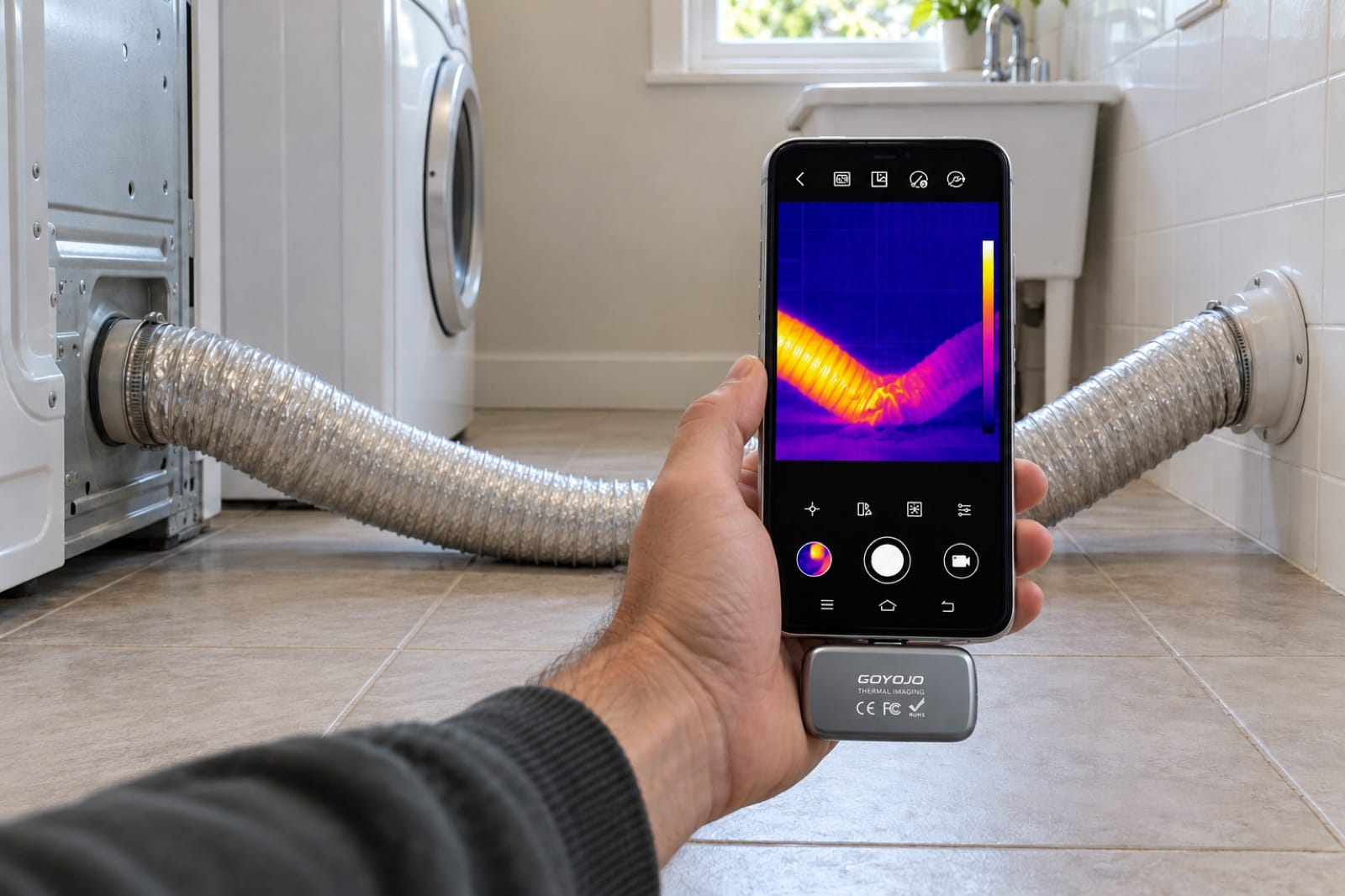
Illustration: a hose that's hot up to one point and much cooler beyond it suggests lint or a squashed bend there.
How do you unclog a dryer vent?
- Unplug the dryer and pull it out gently. If it's gas, leave the gas line to a licensed technician.
- Disconnect the hose or duct from the back of the dryer and clear the lint you can reach with a vacuum.
- Run a dryer vent brush through the duct from the inside, then from the outside if you can reach it.
- Clear the outside hood so the flap opens and closes freely.
- Reconnect and test. Run the dryer and check the airflow outside again.
Clean the filter after every load, keep the hose short and straight, and open a window or door while the dryer runs if it vents into the room. Many dryer makers recommend rigid or semi-rigid metal duct over plastic or foil hose, so check your manual. Condenser and heat pump dryers have a second filter or heat exchanger that needs cleaning too; the manual says where it is and how often.
A long run, a roof vent or a duct you can't reach is a job for a dryer vent cleaning service.
How do you test a refrigerator door seal?
A door seal that no longer closes tightly lets cold air spill out and warm, humid air in. The compressor runs longer, and frost or ice builds up near the gap.
Leave the doors shut for half an hour, then scan every edge from about 3 feet away. This takes around 5 minutes.
- A cold streak running down the outside of the door, starting at one point on the seal, is cold air leaking out. It's usually at a bottom corner, because cold air sinks.
- A warm band around the door opening is often normal. Many fridges run a heated tube or a warm refrigerant line around the cabinet front to stop condensation forming there.
- Warm side panels are normal on many newer fridges, which hide the condenser inside the sides instead of on the back.
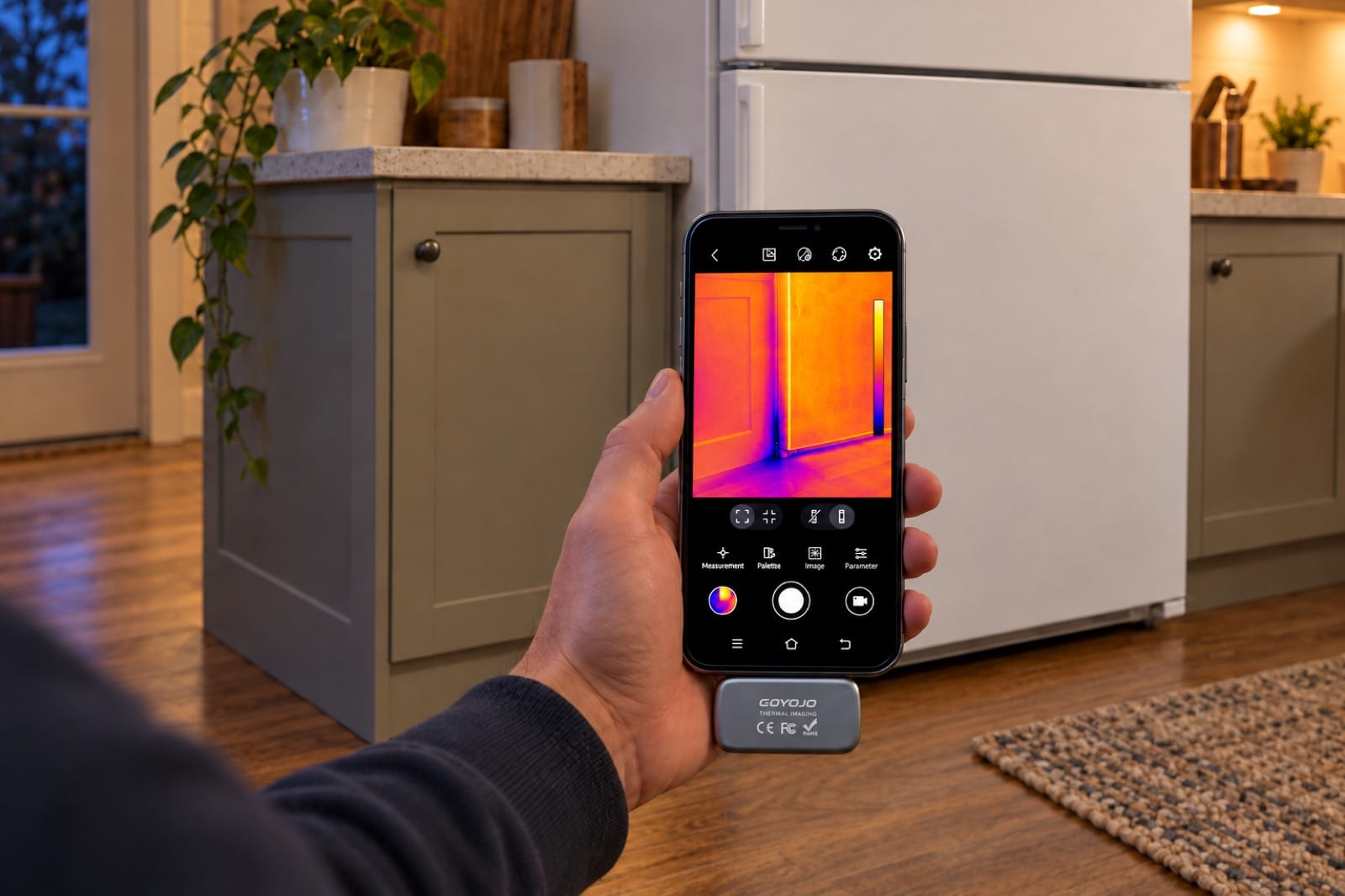
Illustration: a cold streak starting at one point on the seal, usually a bottom corner, is cold air leaking out.
Confirm a suspect spot with the fridge door seal test, also called the paper test: close the door on a sheet of paper at that point and pull. If it slides out with no resistance, the seal isn't gripping there.
What to do: clean the seal with warm soapy water (sticky residue stops it sealing), check the fridge is level so the doors swing shut on their own, and make sure nothing inside is pushing a door open. A torn or flattened seal can usually be replaced with a part ordered by the model number.
Why does a fridge run hot? Check the coils and airflow
Allow about 10 minutes. The condenser is where the fridge gets rid of the heat it pulls out of the food. In hot weather it has less room to work with, and if it's covered in dust and pet hair, or pushed hard against the wall, the heat can't escape.
Run the fridge normally, then look at the back, or the grille at the bottom, with the thermal camera.
- Coils on the back: pull the fridge out a little and scan them. They should be warm fairly evenly. A fridge that runs almost constantly with hot coils and a hot compressor is the warning sign.
- Coils underneath: you see the warm air coming out of the bottom grille. If the floor in front of the grille is hardly warmer than the rest, airflow may be blocked by dust or by things stored beside the fridge.
- The compressor, low down at the back, runs warm to hot. That's normal.
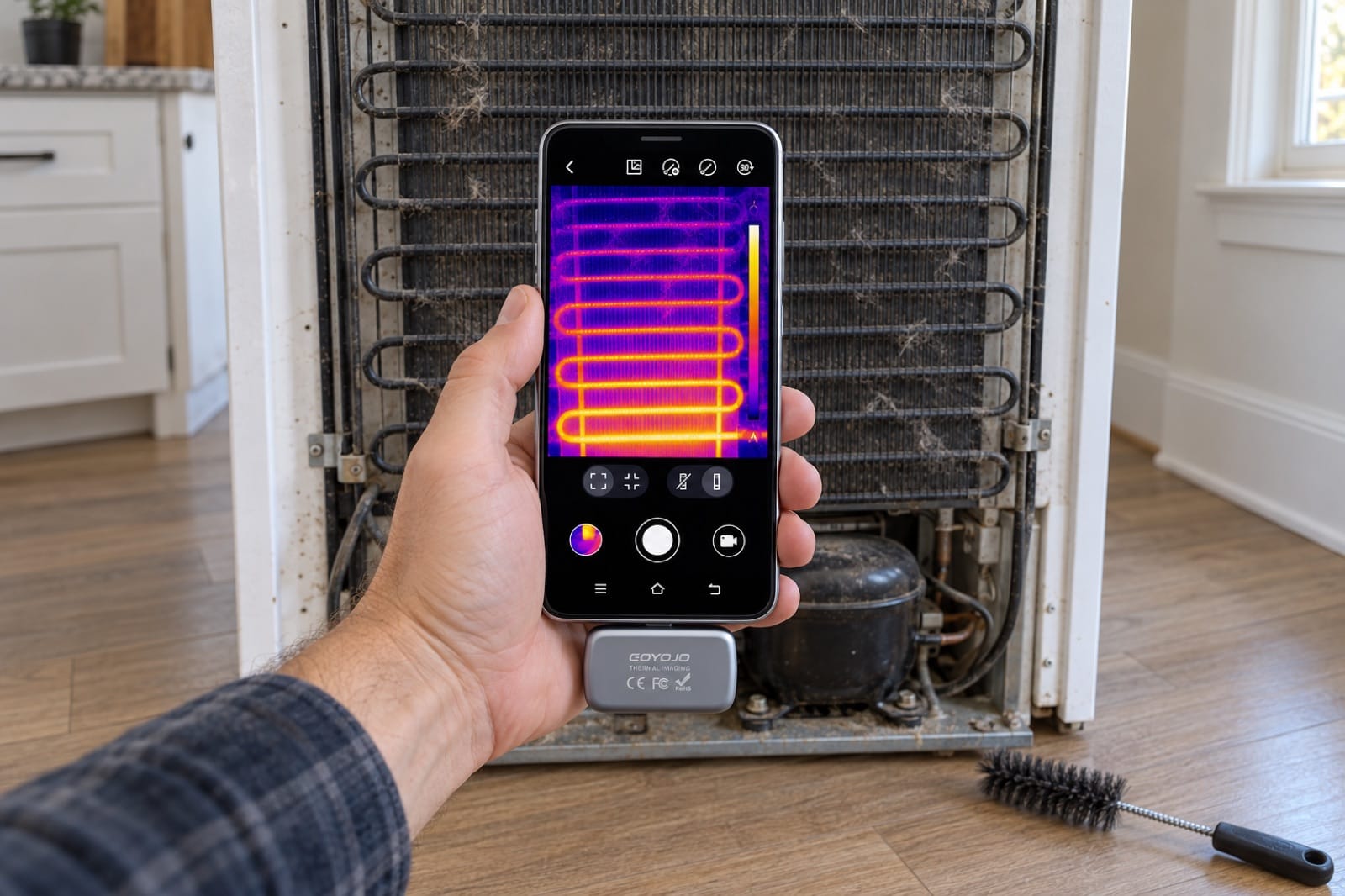
Illustration: coils should be warm fairly evenly; hot coils on a fridge that hardly stops running point to dust or no room to breathe.
What to do: unplug the fridge, vacuum the coils with a brush attachment or a long coil brush, and leave the gap at the sides, back and top that the manual asks for. Built-in cabinetry with no ventilation gap is a common reason a fridge runs hot.
A thermal camera reads surfaces, not air, so it can't tell you if the inside is cold enough. Put an appliance thermometer on a middle shelf. The FDA and USDA recommend keeping the fridge at 40 °F (4 °C) or below and the freezer at 0 °F (−18 °C) or below.
Can a garage fridge or chest freezer keep up in summer?
A second fridge or freezer in the garage, carport or on the back porch has the hardest job in summer. Give it about 5 minutes.
- Check the room temperature range in the manual or on the rating plate. Some fridges show a climate class, and the ST and T classes are designed for hotter rooms. An appliance rated for a cooler room may not keep food cold in a hot garage.
- Scan the lid or door seal all the way around. A cold line escaping at one point is a leak; check whether the lid closes evenly or something holds it open.
- Look at the frost pattern inside. Frost concentrated in one corner, right behind the seal, usually sits next to the leak.
- Scan the wall behind it. A garage wall that reads hot in the late afternoon heats the air around the fridge; a shaded wall with space around it helps.
What a thermal camera can't tell you
- It can't measure the air temperature inside the fridge or freezer. Use a thermometer.
- It doesn't see inside a hose or a duct, only the surface that hot air warms. A short blockage close to the dryer can be hard to spot, and a duct inside a wall may not show at all.
- It reads surfaces under load, so run the appliance first. A cold dryer or a fridge with its door just opened tells you very little. If you're new to this, how a thermal camera works and our page on thermal cameras for iPhone explain the basics.
Frequently asked questions
Can you use a dryer if the vent is blocked?
It's best not to. A blocked vent traps hot, lint-filled air, so the dryer runs hotter and takes longer, and lint is flammable. Stop using it until the vent is clear, especially if you notice a hot or burning smell. If you've already cleared the filter and the outside vent and the airflow is still weak, have the duct cleaned before the next load.
Will a dryer not heat if the vent is clogged?
It can happen. Many dryers have safety devices that cut the heat when the dryer overheats, and restricted airflow is a common reason they trip. Some need a replacement part once they've gone. Clear the vent first, then run a test load. If there's still no heat, the problem may be a part inside the dryer, so check the manual or call a technician.
How often should you clean a dryer vent?
A common recommendation is at least once a year, and more often if you run a lot of loads, have pets or have a long duct. Clean the lint filter after every load whatever the schedule. Don't wait for the calendar if the signs show up: long drying times or weak airflow outside mean it's time to look now, not at the next yearly clean.
What should I do if I dropped something in my dryer vent?
Don't run the dryer until it's out. Unplug the dryer, pull it out gently, and disconnect the hose or duct. A small flashlight or an inspection camera can show where the item landed, and a vacuum or a long grabber can often reach it. If it's deep in a wall duct and you can't reach it, ask a dryer vent cleaning service.
The tools in this guide
Prices are on each product page, in your local currency.
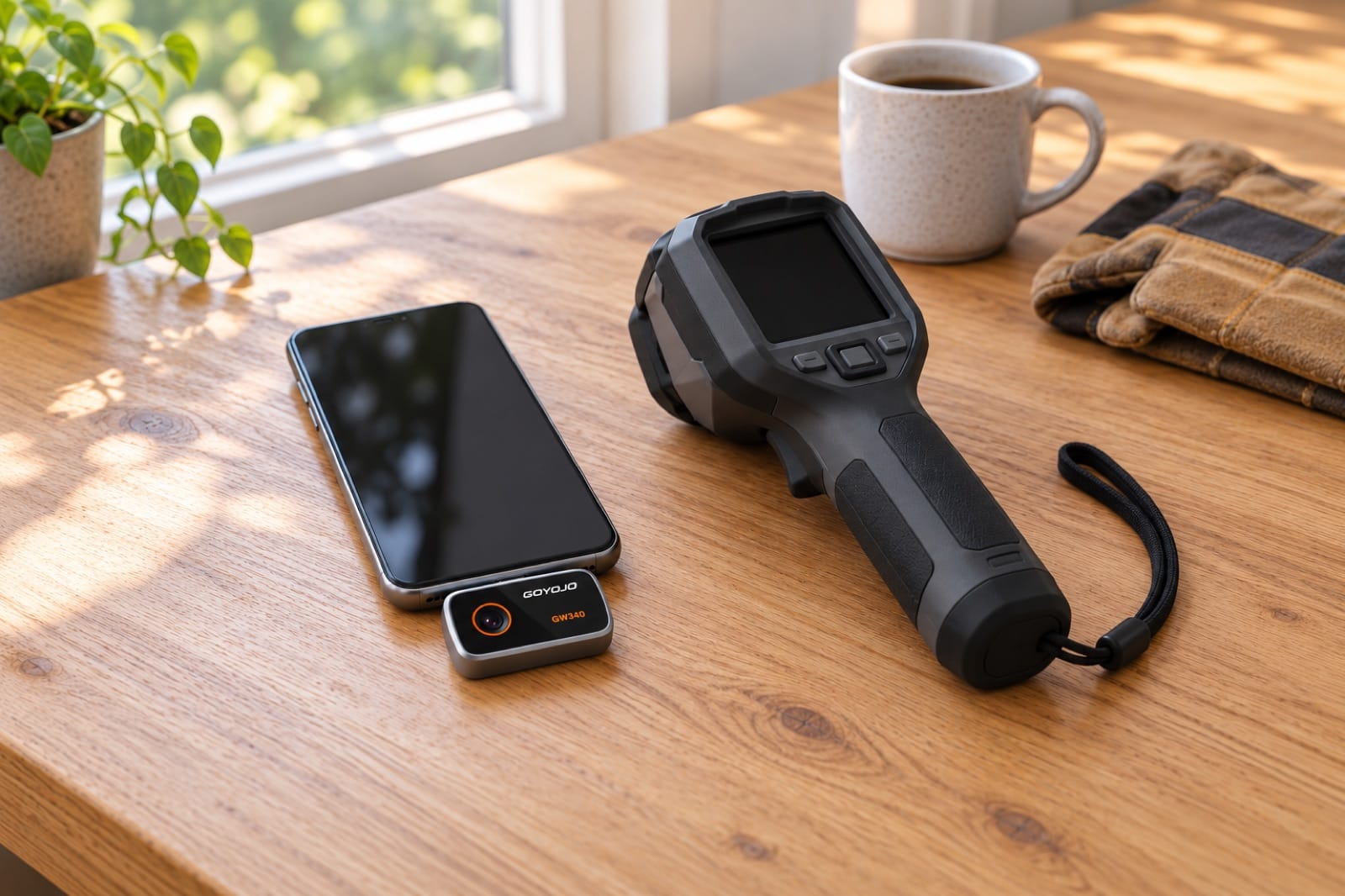
- Spark Pro — sharp enough to see a cold leak line on a door seal from across the kitchen, and to check the garage wall and roof from the ground.
- Spark — works well here too, because you can stand close to a fridge door or a dryer outlet.
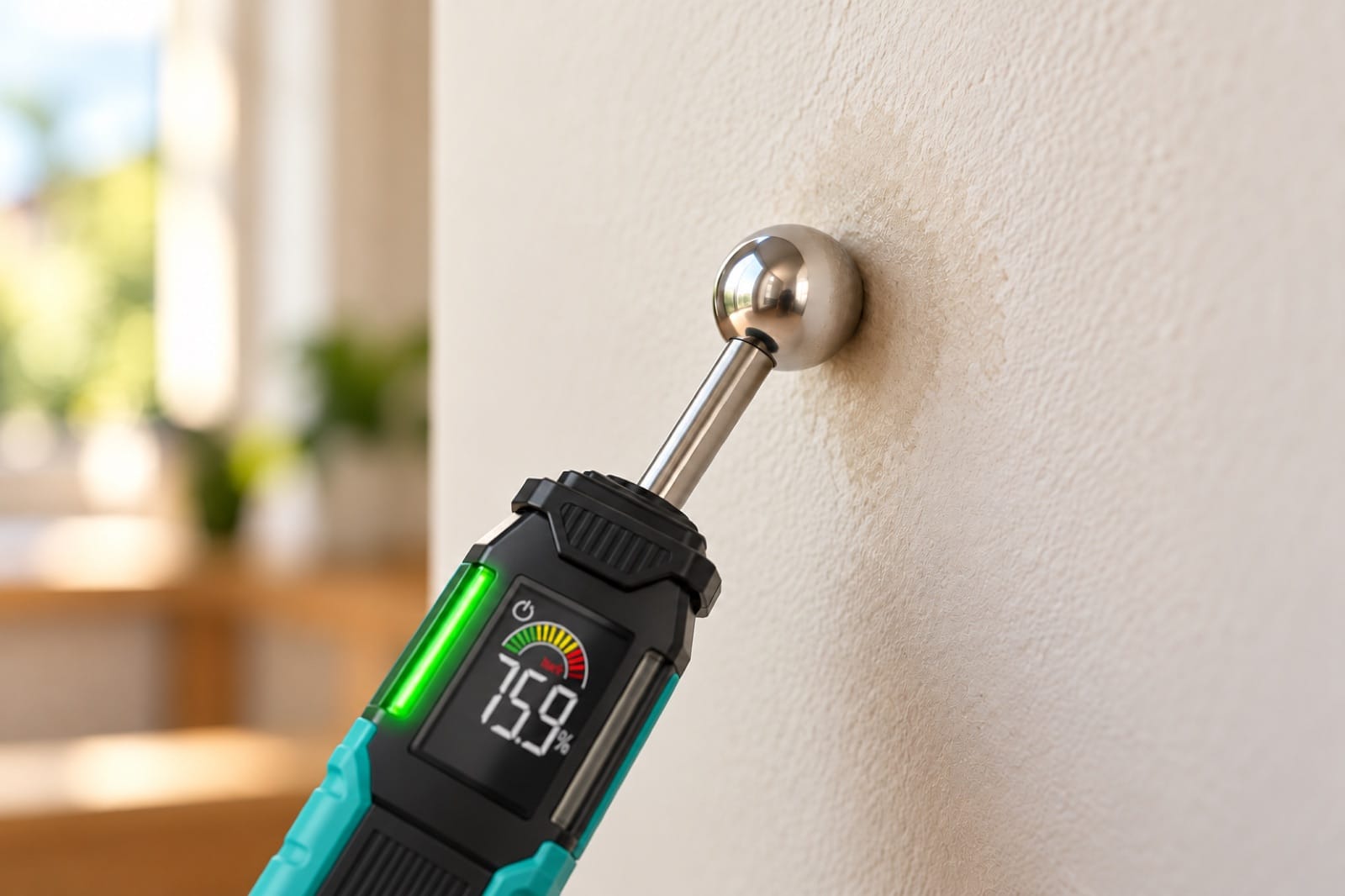
The Whole Home Kit adds the Damp moisture meter and the Reach 360 inspection camera to Spark Pro, for 10% less than buying them separately: handy for checking the floor under the fridge and the laundry room ceiling.
Find the leak, the dust and the blocked vent in one evening. Order Spark Pro, or start with Spark if you'll mostly work up close.