Animals in the attic or walls: find nests without opening anything up
Thumping across the ceiling at 2 am. Scratching inside a wall at dusk. Birds flying in and out under the eaves, or a steady hum of bees from one corner of the house. Animals in the attic are common: raccoons, possums, squirrels, rats, mice, birds, bees and wasps all like a dry, sheltered attic or wall cavity, and in late spring and summer it's nesting season for many of them.
The first job is to work out where they are and how they get in, without pulling down drywall to find out.
Short answer: Animals in the attic usually give themselves away with noises at a regular time of day, droppings, and chewed or greasy gaps along the roofline. Those clues narrow down the species. A thermal camera can then show warm bodies in the open attic at night, but usually not an animal behind drywall.
How do you know if you have animals in the attic?
Spend a few days collecting clues first. It's free, and they narrow down both the animal and the spot.
- Where you hear it. Above one room, inside one wall, along the eaves. Note it each time.
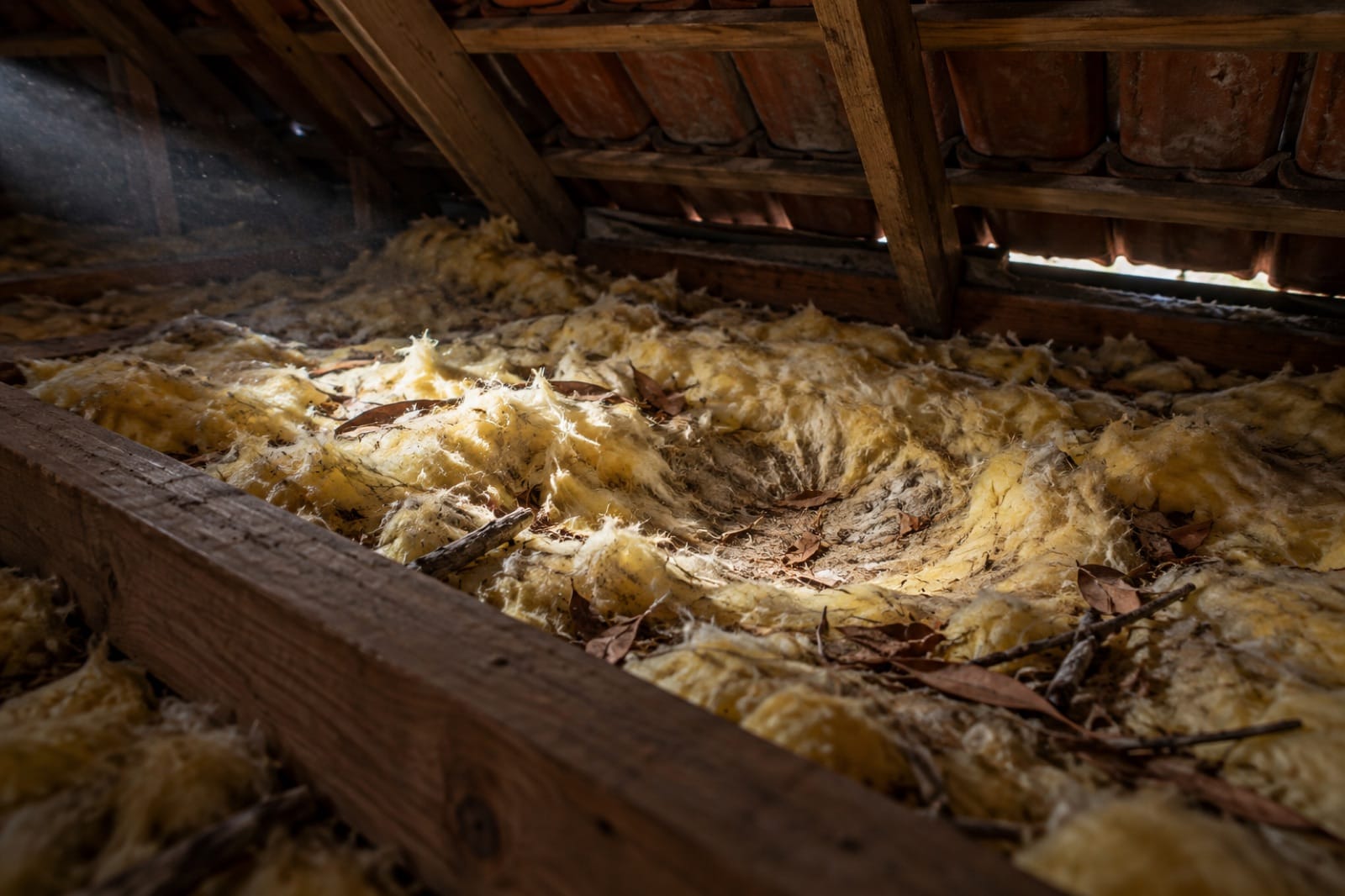
- Droppings and stains. Look around the attic hatch and on top of the insulation with a flashlight. A dark urine stain spreading on the ceiling usually means a nest or a regular toilet spot right above it.
- Outside, look up. In daylight, walk around the house and look at the roofline: gaps under the ridge cap or at the ends of the eaves, a lifted or broken shingle or tile, a hole in the fascia, a missing vent cover, gaps where pipes and cables enter. Greasy rub marks or chew marks around a gap mean it's used a lot.
How can you tell what animal is in your attic?
Timing and sound are the best first clues. This is a rough guide: habits vary by region and season.
| Animal | What you hear, and when | Other signs |
|---|---|---|
| Raccoon | Heavy thumps and running after dark; leaves at dusk, back before sunrise | Large droppings piled in one spot; torn vents |
| Possum | Heavy thumps and shuffling after dark | Larger droppings; dark urine stain on the ceiling |
| Tree squirrel | Quick scurrying by day, often morning and late afternoon | Oblong droppings; chewed fascia |
| Rat | Scratching and gnawing at night | Larger dark droppings; greasy rub marks |
| Mouse | Light, fast scratching at night | Small, dark, pointed droppings |
| Bat | Faint squeaks and fluttering at dusk and dawn | Crumbly droppings under the roost |
Chirping and movement in the early morning points to birds; a hum during the day, to bees.
Can a thermal camera see animals in the attic or walls?
A thermal camera sees surface temperature. A warm animal shows up only when its body heat reaches a surface the camera can see, and only when its body is warmer than what's around it. That decides everything:
| Situation | What you'll see |
|---|---|
| Possum or rat in the open attic, on top of the insulation | Clearly: a bright warm shape, often moving |
| Animal curled in a nest near the surface of the insulation | Usually: a warm spot |
| Animal deep under insulation | Maybe a faint warm patch, maybe nothing |
| A single animal inside a wall cavity, behind drywall | Usually nothing; at most a faint warm patch if it's been pressed against the drywall for a while |
| An active bee hive inside a wall or the roof | Often a warm patch on the surface: the colony keeps its brood warm all the time |
| Empty nest | Nothing: it's the same temperature as everything around it |
Be honest about what a blank screen means: not that the wall is empty, only that nothing warm is right behind the surface. If colors and hot spots are new to you, start with how to read a thermal image.
When should you scan the attic with a thermal camera?
In summer, timing matters. On a hot afternoon the attic can be hotter than an animal's body, and a possum may show as nothing at all, or even as a cooler shape. After dark and in the early hours the attic cools down, and a warm body stands out clearly. Allow about ten minutes.
- Open the attic hatch and look before you climb in. Often you can see a good part of the attic from the ladder.
- Scan slowly across the insulation, along the eaves where the roof meets the walls, and near any gap you found outside. Hold each area for a few seconds; a warm spot that moves or changes shape is alive.
- Note where the warm spot is relative to the room below, and take a thermal photo.
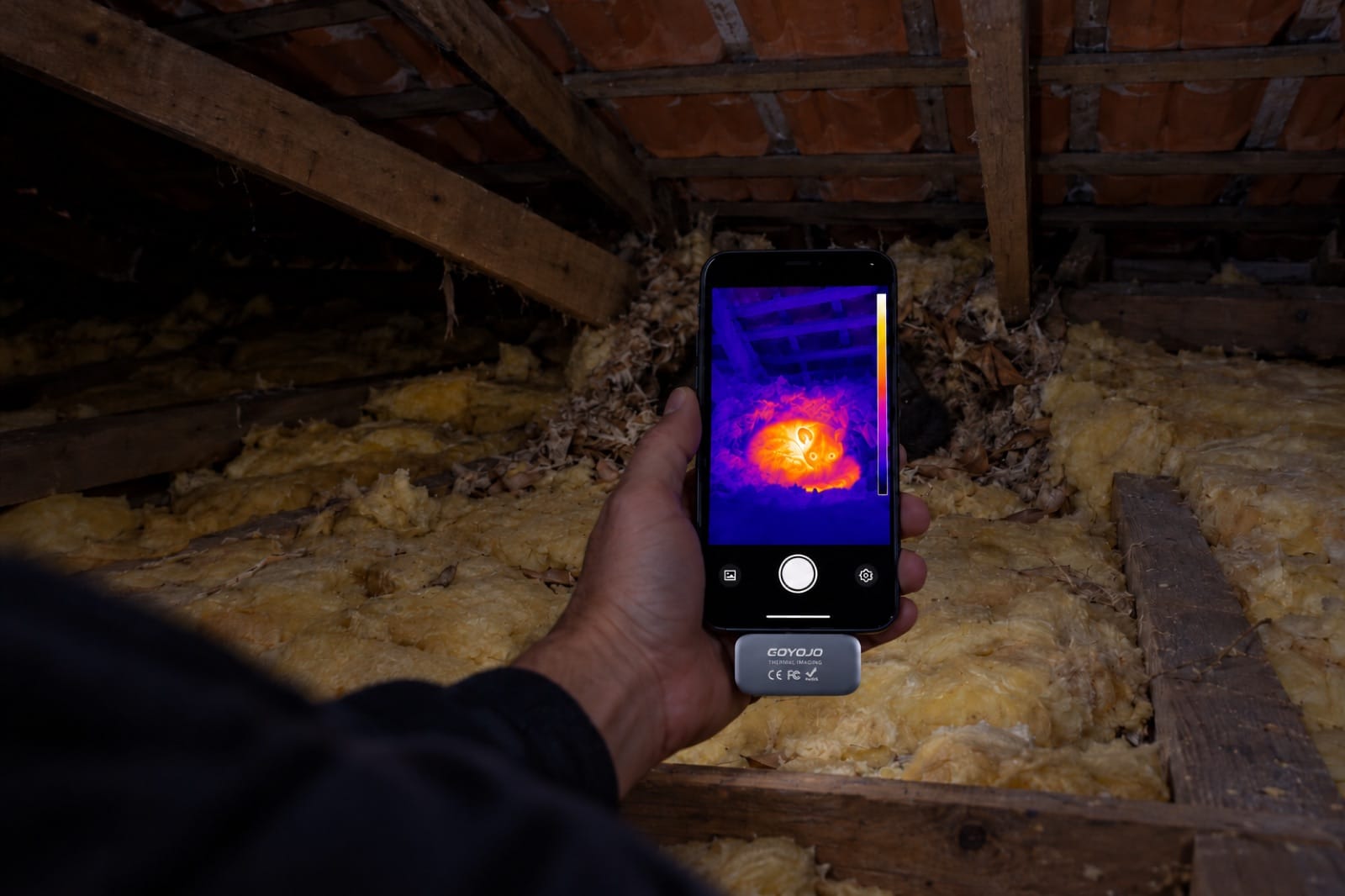
Illustration: at night the attic cools down and a possum's body heat stands out clearly. On a hot afternoon it might not show at all.
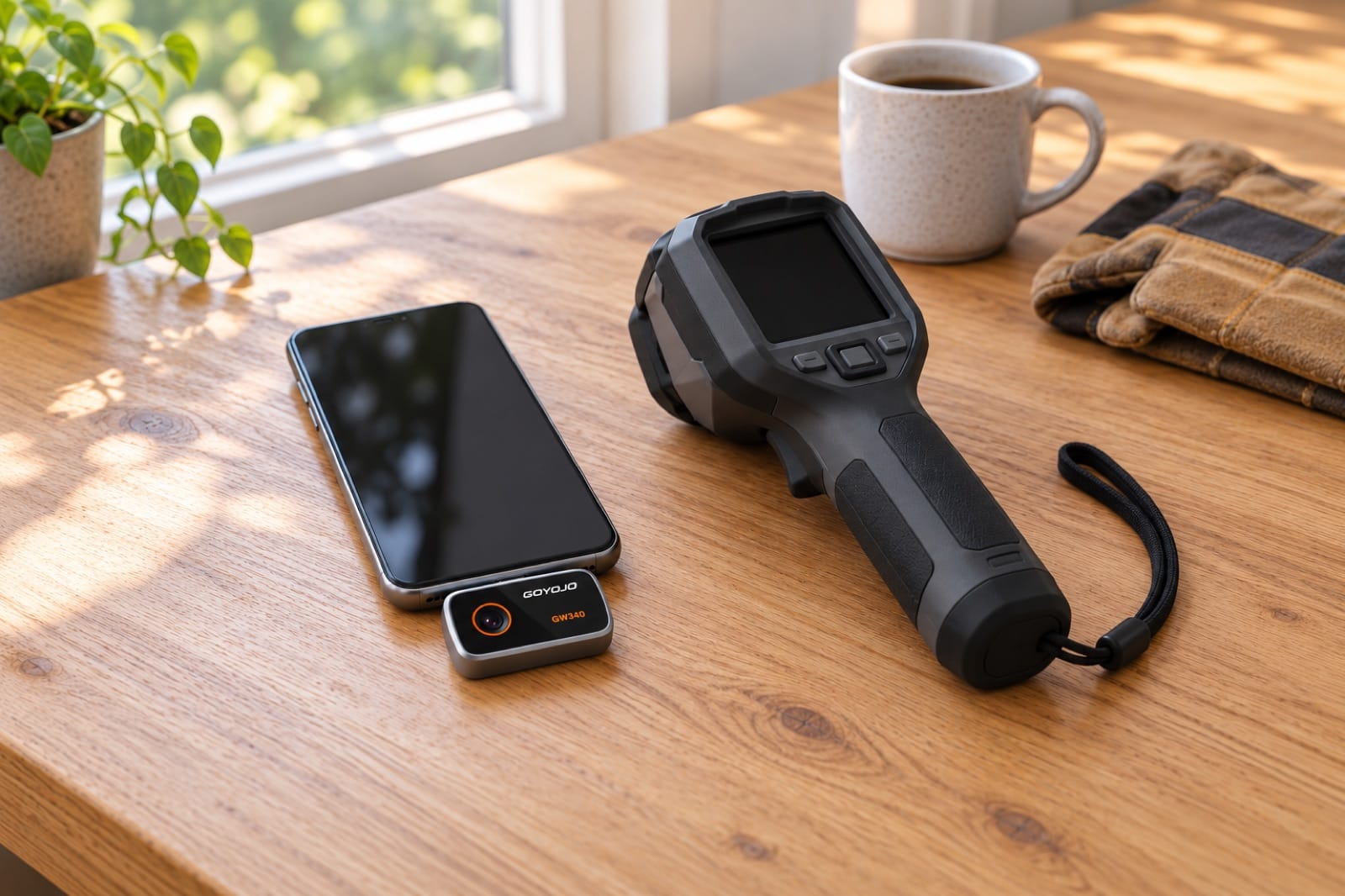
With Spark Pro, an animal across the attic is still a clear shape, so you can do most of this from the ladder. With Spark you'll need to get closer.
If you climb in, step only on the joists: drywall won't hold your weight.
Is that warm spot a nest or a recessed light?
The most common false alarm: warm spots in the attic that come from the house, not from an animal.
Switched-on recessed lights and their transformers, exhaust fans, AC ducts and a water heater in the attic all show up as warm or cool spots. At night, with lights on below, a row of recessed lights glows just like a row of nests would.
How to tell them apart:
- A fixture is centered on something: a light, a fan, a duct, a pipe. The spot is round or follows a straight line, and it fades evenly outward. Switch the lights below off for a few minutes and it fades.
- An animal has a body shape, sits in a hollow or a nest of shredded material, and is often not centered on anything. Watch for a minute: animals shift; fixtures don't.
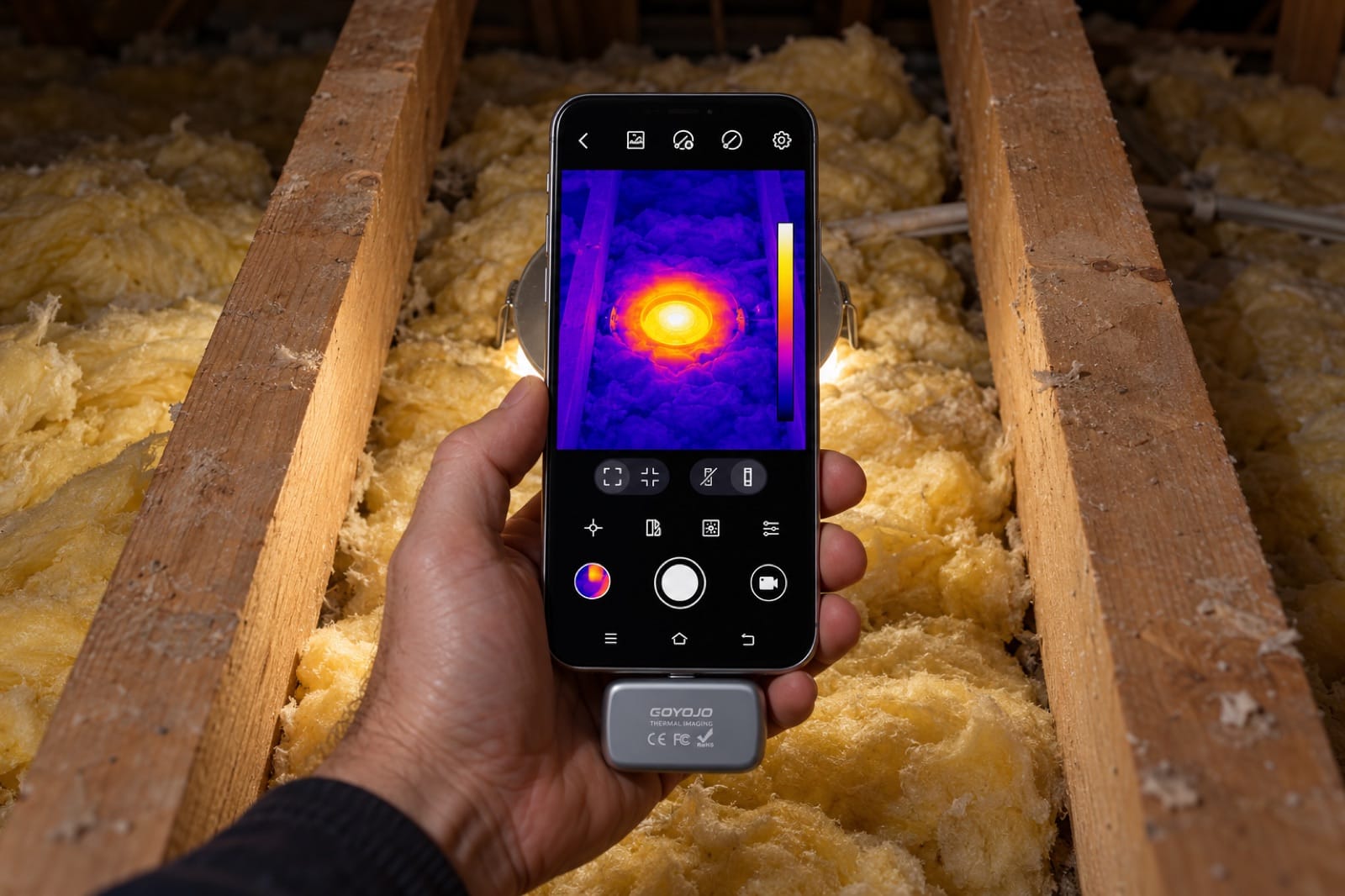
Illustration: not a nest. A switched-on recessed light makes a round spot centered on the fitting; an animal has a body shape and moves.
Note any insulation pressed hard against a hot recessed light too: many older ones need clearance, and an electrician can tell you what yours need.
How do animals get into the attic?
Finding the way in matters as much as finding the nest. Go outside at dusk or dawn and watch the gaps you noted.
- Possums and raccoons usually leave at dusk and return before dawn. Stand outside at dusk with the thermal camera pointed at the gap you suspect: a warm shape squeezing out shows you the main entrance.
- Rats use the same paths every night, often along fences, power lines or branches that touch the roof.
- Squirrels and birds come and go in daylight; just watch.
Warm air can leak out of gaps too, so trust movement, not just a warm patch. If you see water stains near a gap, here's how to trace a roof leak from inside.
How do you find an animal in a wall without opening it?
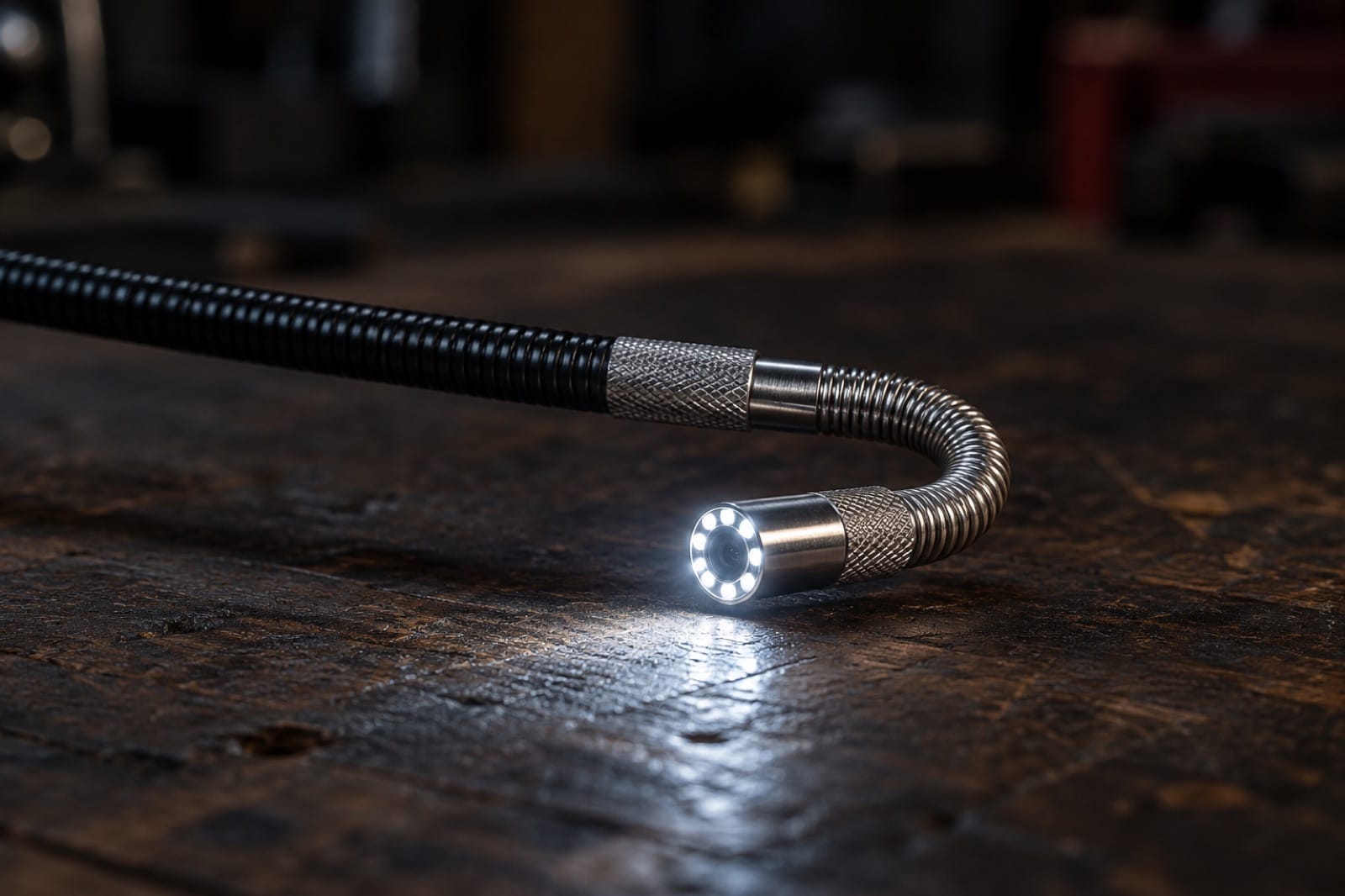
If the noise is in a wall rather than the attic, an inspection camera can look inside without opening it up. It takes about 15 minutes. Our guide to the articulating borescope for iPhone explains why a steerable tip helps.
- Use what's already there: the gap around the pipes under a vanity or the kitchen sink, holes where pipes or cables come down into the wall from the attic, or a wall vent.
- Don't push a camera into an outlet or a switch box, and don't drill near outlets or switches; cables run straight up and down from them.
- Slide the tip in, bend it to look up and down the cavity, and look for shredded paper, fabric or insulation, droppings, and chewed wood or cables.
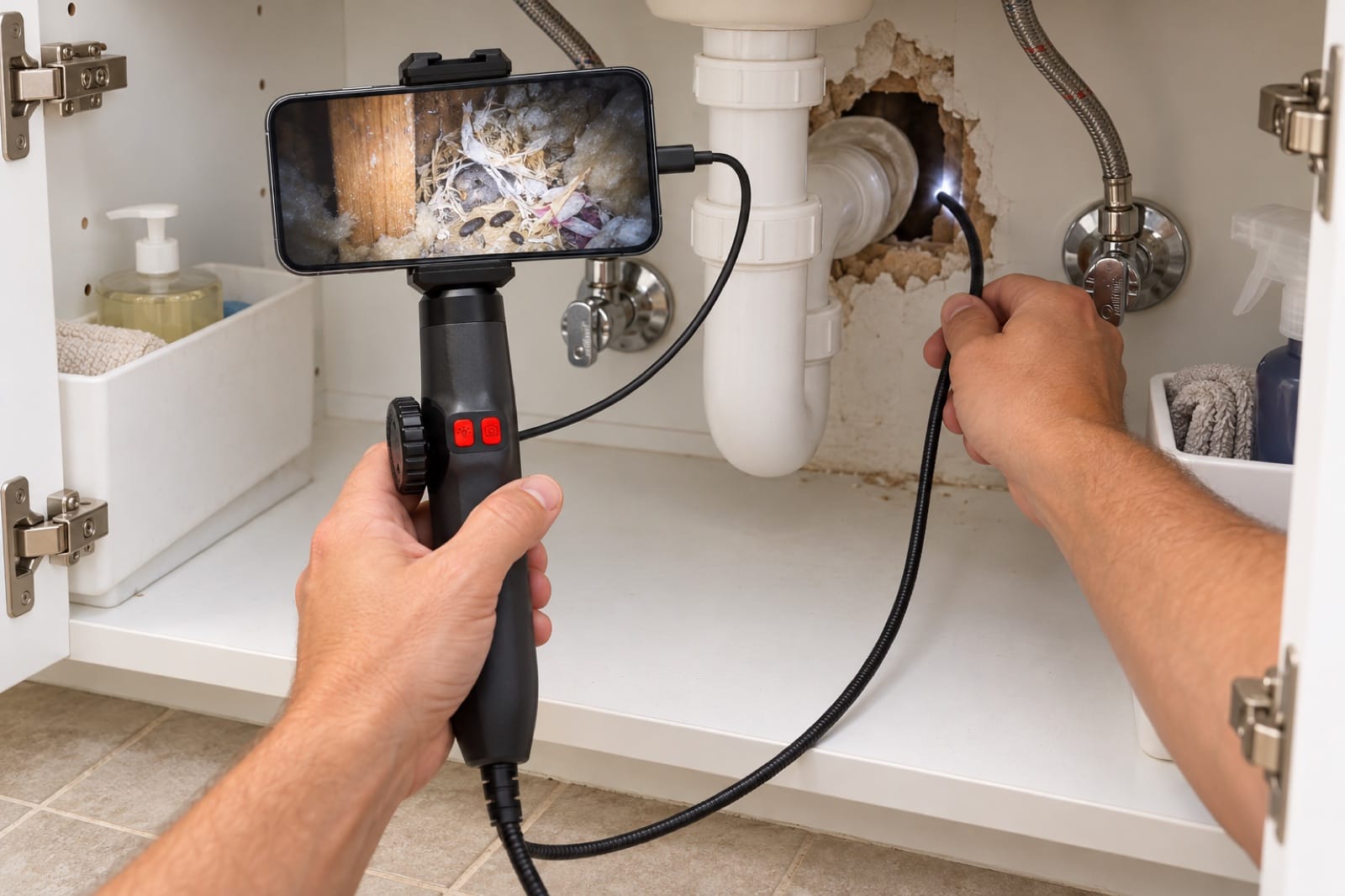
Illustration: the gap around the waste pipe is enough. Bending the tip up the cavity shows the nest without cutting the wall.
Reach 360 has a 6.2 mm tip that bends up to 180° each way on a 1 m cable, so one gap is usually enough to look along the cavity in both directions.
How do you get rid of animals in the attic safely?
Mice are often a job for snap traps along the paths they use. Larger animals, bats, and anything with young are a job for a pro. The safety rules are the same:
- Don't touch, corner or try to catch a wild animal. A cornered possum or rat will scratch and bite. Never handle a bat with bare hands.
- Droppings and urine carry disease. Wear gloves and a mask, wet droppings with disinfectant before cleaning them up, and don't sweep or vacuum them dry. Leave large clean-ups to a pro.
- Bees and wasps: don't block the entrance or spray into the wall. A trapped colony can find its way into the house instead. A beekeeper or a bee removal service can often take a hive out alive; wasp nests are a job for a pest control company.
- Don't seal the entrance while animals are inside, especially if there may be young ones. They'll die in the attic or chew a new way out. Professionals use one-way doors that let animals leave but not come back.
- Call a licensed wildlife control or pest control company. In many places bats, many birds and some other wildlife are protected, and catching or moving them is regulated, so check your local rules or let the pro handle it.
What you bring them saves time: thermal photos of the nest, the entry points you saw in use, and where and when you hear the noise.
Avoid poison, which can leave an animal dying somewhere you can't reach. Sealing one gap just moves the animal to the next, so close them all once the attic is empty.
What should you do after the animals are gone?
Scan the attic again at night to check that nothing warm is left before the last gap is sealed. Look for chewed cables (a job for a licensed electrician) and flattened or soiled insulation that needs replacing. Trim branches that touch the roof, so the next visitor doesn't have a bridge. Our home inspection checklist shows what else to check while you're up there.
Frequently asked questions
Are squirrels active at night in attics?
Most tree squirrels are active by day, especially in the morning and late afternoon, so running noises at 2 am usually point to something else, such as rats, mice, raccoons or possums. The exception is flying squirrels, which are active after dark.
How long will mice stay in the attic?
Don't expect them to leave on their own. As long as an attic offers shelter, warmth and a nearby source of food, mice can stay indefinitely and keep breeding. They usually stop being a problem only after you remove them, take away easy food, and close the gaps they use to get in.
What gets rid of mice immediately?
Nothing clears them instantly. Snap traps along walls and joists, where mice already run, are one of the quickest ways to reduce their numbers, and you can see what you've caught. Check them often. To stop new mice from coming in, seal gaps of about a quarter inch or more once the attic is clear.
Are animals in the attic dangerous?
They can be. Wild animals may bite or scratch when cornered, droppings and urine can carry disease, and gnawed cables can create a fire risk. Don't handle bats, raccoons or their droppings yourself. If you're bitten or scratched, or feel unwell after contact or a cleanup, see a doctor and mention the animal.
The tools in this guide
Prices are on each product page, in your local currency.
- Spark Pro — shows a warm animal across the attic from the attic hatch.
- Spark — the same app and colors, when you can get close.
- Reach 360 — steerable 6.2 mm inspection camera to look inside a wall through an existing gap.
Find out where they are before anything gets opened up. Order Spark Pro, or get the Whole Home Kit with Reach 360 to look inside the walls too.