How to find drafts and insulation gaps with a thermal camera
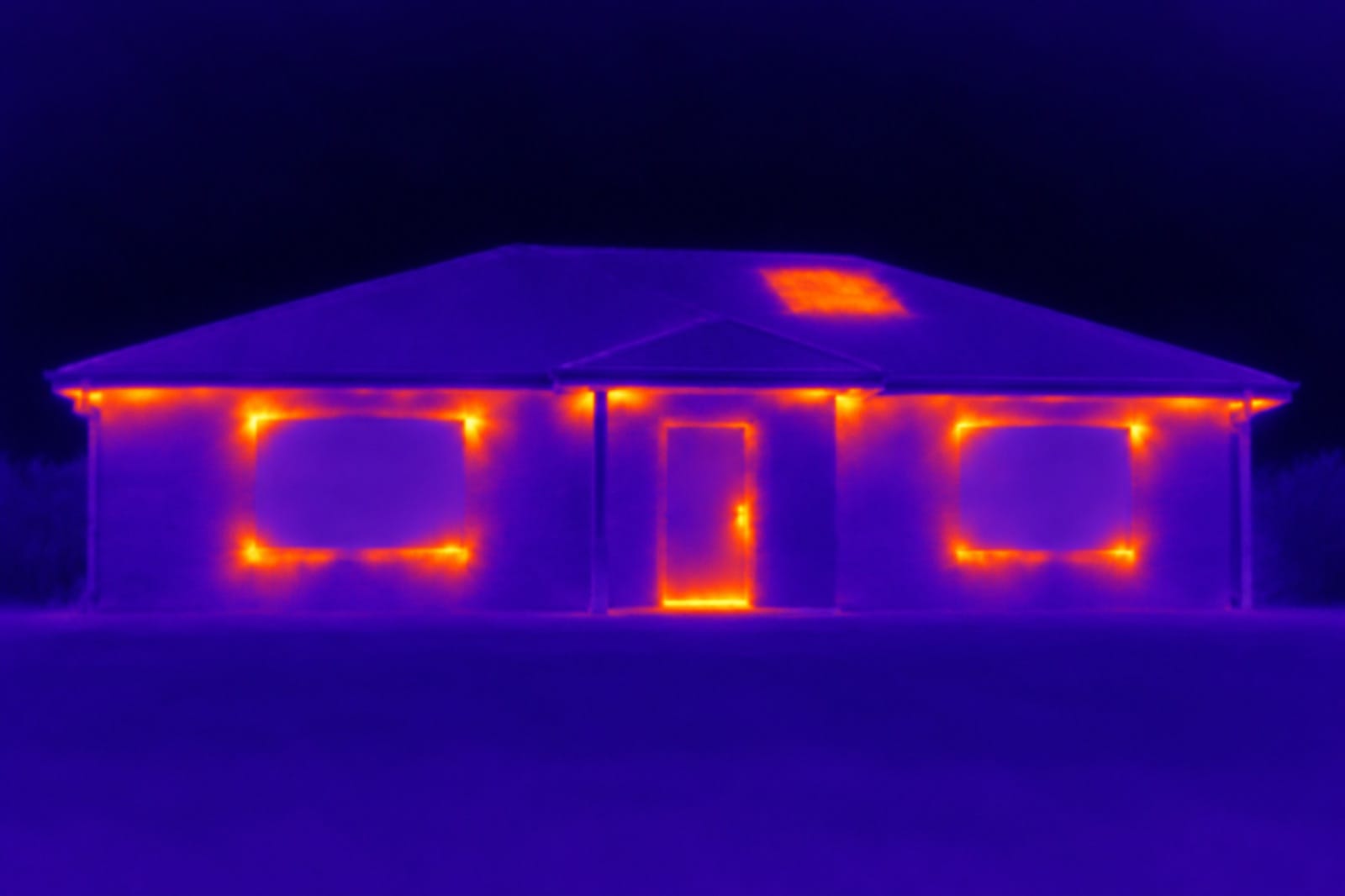
You've got the AC on, the doors shut, and one room still never gets cool. Or in winter there's that spot on the couch where you can feel a breeze with every window closed. Somewhere, outside air is getting in and the air you paid to heat or cool is getting out.
Drafts and gaps in the insulation are hard to find by feel, because moving air spreads out before it reaches you. A thermal camera makes them visible as streaks and patches on the surface. Here's how to find them in an afternoon, and which fixes are a weekend job and which need a pro.
1. Pick the right day (free)
A thermal camera shows surface temperature, so you need the outside air to be noticeably colder or hotter than the inside. A difference of around 10 °C or more makes drafts much easier to see.
- Winter: a cold morning, with the heating on for an hour beforehand. Drafts show as cold, purple streaks.
- Summer: a hot afternoon, with the AC on for an hour. Drafts and missing insulation show as warm, orange streaks.
- Spring and autumn: often too mild. Wait for a cold snap or a hot day.
2. Make the drafts stronger (free)
This is a homeowner's version of the "blower door test" an energy assessor does with a fan in the front door.
- Close every external door and window.
- Turn off any evaporative cooler and the ducted system, if you have one.
- Turn on every exhaust fan you have: the range hood, bathroom and laundry room fans.
The fans push air out of the house, and outside air is pulled back in through every gap. A draft you could barely feel becomes a clear streak on the camera.
3. Scan room by room (30–60 minutes)
Work slowly and stand a couple of meters back first, so you see a whole wall or doorway in one frame. Then move in on anything that looks different.
The usual places in most homes:
- External doors. The gap under the door, the latch side and the top corner of the frame.
- Windows. Old timber sashes, sliding aluminum windows where the seals have worn, and the gap between the window frame and the wall.
- Recessed lights and exhaust fans. Older recessed lights have open vents into the attic, and many exhaust fans have no flap that closes when they're off.
- Wall vents and fireplaces. Older houses often have permanent vents high on the wall, and an open chimney is a large hole in the roof.
- Evaporative cooler outlets. In winter the ceiling vents of an evaporative system let warm air straight out into the roof.
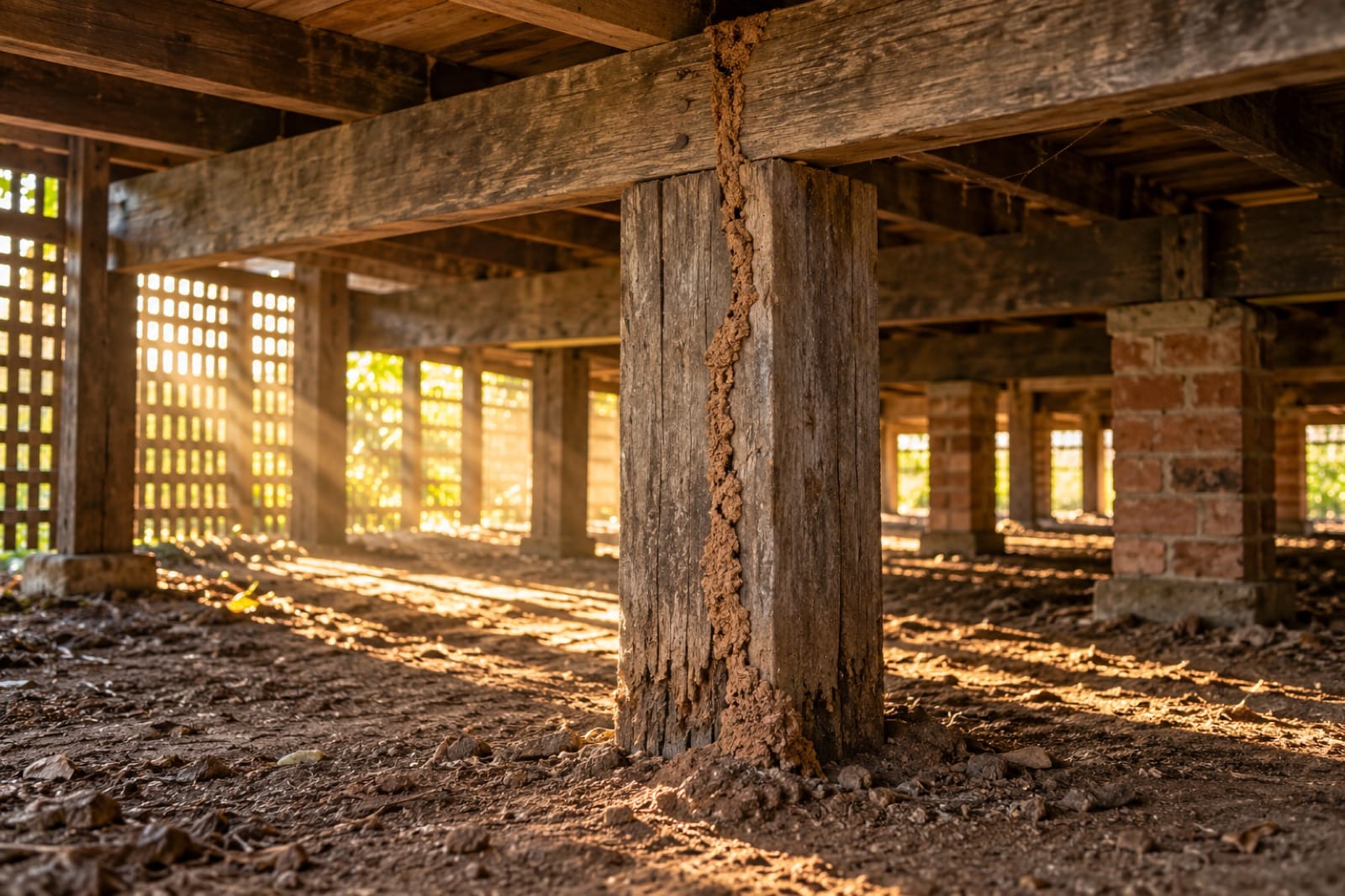
- Floors and baseboards in raised timber homes, where air comes up from the subfloor between boards and under baseboards.
- Pipe holes under the kitchen sink, behind the washing machine and around the water heater.
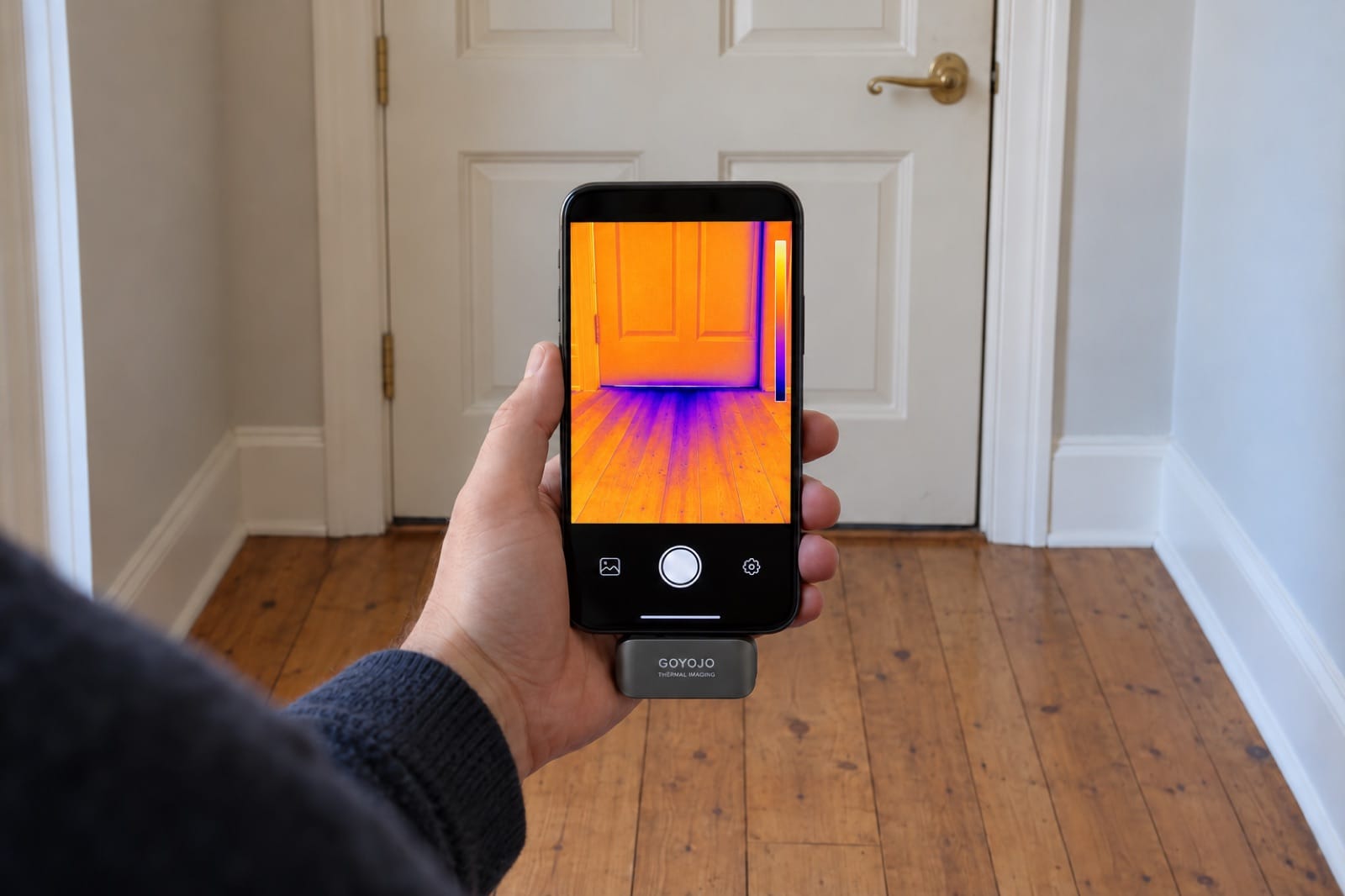
Illustration: with the exhaust fans on, cold outside air is pulled in under the door. The door itself looks perfectly normal.
4. Read the pattern
What you see on the screen has a shape, and the shape tells you what it is.
| What you see | What it usually is |
|---|---|
| Feathered streaks spreading out from a gap, like fingers | A draft: air moving through a gap |
| A sharp-edged rectangle on the ceiling | A missing or shifted insulation batt |
| A ring around a recessed light | Heat or cold coming through the light's opening, or insulation cut back around it |
| Thin, regular lines along studs or ceiling joists | Normal: the framing conducts heat a little better than the insulation between it |
| A cold patch that doesn't change when the fans go off | More likely damp or missing insulation than a draft |
That last one is a useful test: turn the exhaust fans off, wait ten minutes and scan again. A draft fades when the air stops moving. Missing insulation and damp stay the same.
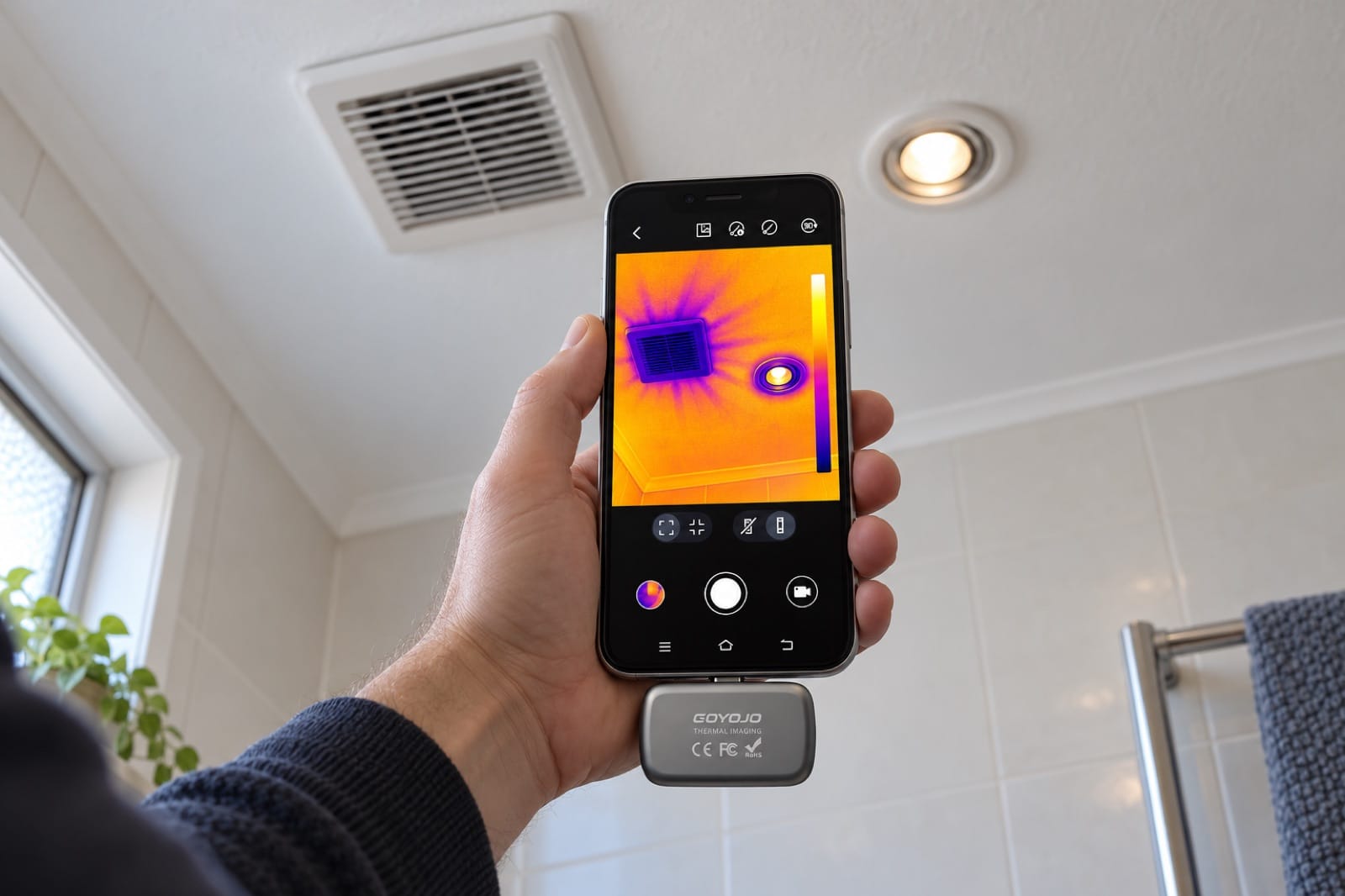
Illustration: an exhaust fan with no closing flap and an open recessed light both let roof-space air into the room.
The streak a draft leaves on the wall or floor is often 20–50 cm long, so both our cameras pick it up from a couple of meters back. The gap itself is a thin line, and that's where resolution matters: Spark Pro shows the exact spot along a door seal from about a meter away, while with Spark you'll need to get within about 20 cm to pin it down.
5. Check the floor and the baseboards
In houses on stumps or brick piers, the subfloor is open to the outside air. Gaps between floorboards, under baseboards and around pipes let it in. On a cold morning these show as purple fingers running along the bottom of the wall.
Look closely at corners and behind furniture, where you'd never feel the draft but the room still loses heat.
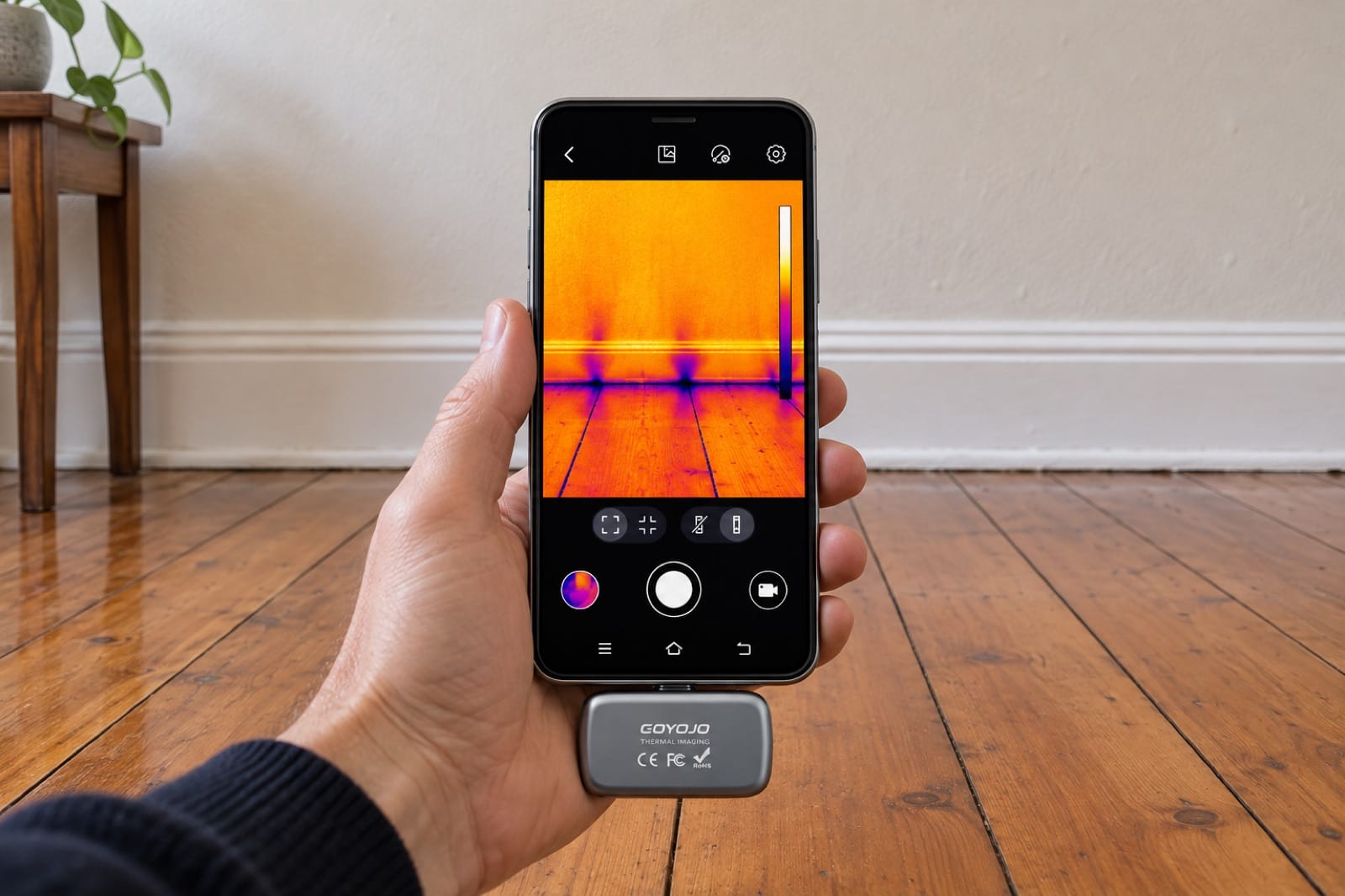
Illustration: in a house on stumps, subfloor air comes up between the boards and under the baseboards.
6. Fix what you found
Most draft-proofing is cheap and something you can do yourself:
- Doors: a door bottom seal or a draft stopper, and self-adhesive foam or rubber seal around the frame.
- Windows: replace worn seals, and fill gaps between the frame and the wall with a flexible gap filler.
- Exhaust fans: fit a cover with a flap that closes when the fan is off.
- Baseboards and floor gaps: a flexible sealant along the bottom of the baseboards; a gap filler around pipe holes.
- Chimney: a chimney balloon or a damper when the fireplace isn't in use.
Some fixes are not DIY:
- Recessed lights. Replacing old open recessed lights with sealed, IC-rated LED recessed lights is electrical work for a licensed electrician (in most places this is required by law).
- Ceiling insulation. Topping up batts is a common DIY job, but the attic is where the wiring runs. Turn off the power at the electrical panel before you go up, and never staple, nail or lay foil insulation near electrical cables. If the house was built before 1990 and you don't know what's in the roof, have it checked for asbestos before you disturb anything.
After you've fixed a few things, scan again on a similar day with the same fans on. It's a quick way to see what's made a difference and what's still leaking.
The tools in this guide
Prices are on each product page, in your local currency.
- Spark Pro — sees thin draft lines from across the room and a whole ceiling in one frame.
- Spark — finds the same gaps when you work close to each door and window.
Drafts are often only half of it. If you find a cold patch that doesn't fade when the fans are off, it may be damp: our Whole Home Kit adds a moisture meter and an inspection camera to Spark Pro, for 10% less than buying them separately.